Why Keep Recruiters Full-Time if Your Hiring is Not Full-Time?
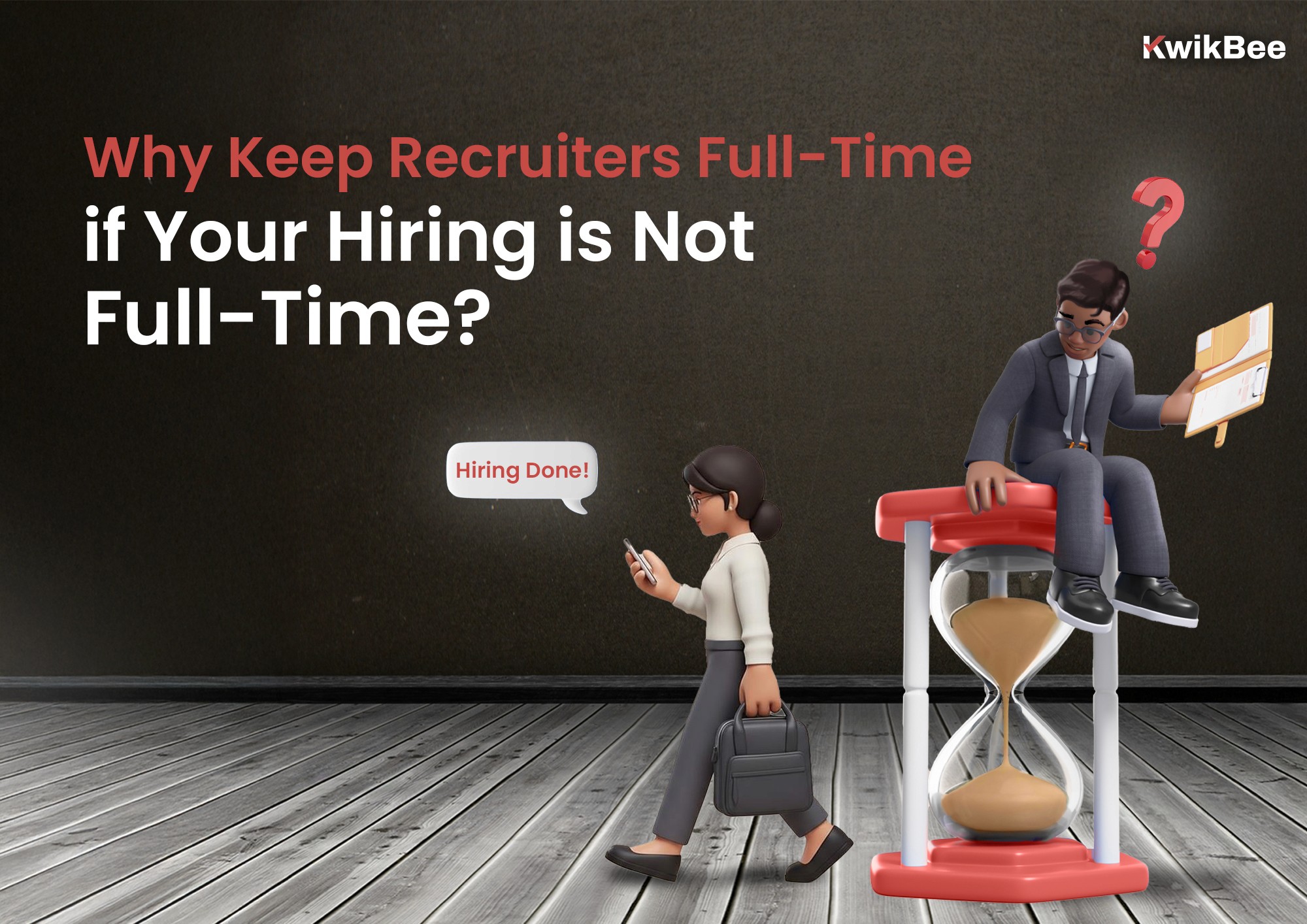
Does running your talent acquisition team feel like running a fire department? Most days, your recruiters are sitting around, polishing their LinkedIn profiles and perfecting their coffee-making skills.
Then suddenly, boom – seven urgent positions drop, the CEO wants a developer hired tomorrow, and everyone is scrambling like a sudden earthquake just hit the floor.
Sound familiar? You are not alone.
Here's the thing. Recruitment is not a steady-state business. It is more like an unexpected rain – one second it is sunny and then intense rainfall. Leaving you wondering if you have overstaffed your team or if the market has just decided to take a nap.
The Reality of Modern Recruitment
Let us be brutally honest about something we all know but rarely discuss openly. Recruitment is inherently cyclical.
One month you are drowning in positions, managing panicked calls from hiring managers, and the next month? Nothing. Your full-time recruiters are updating their skill sets, reorganizing their CRM for the fifth time, and you are wondering if keeping a full team on payroll makes financial sense.
Think about it: would you keep a full catering team on staff year-round if you only hosted major events quarterly? Probably not. Yet that is exactly what many organizations do with their recruitment teams.
The numbers do not lie. Many reports suggest that most companies experience a 40-60% fluctuation in their hiring needs throughout the year. Seasonal businesses see even wider swings.
Meanwhile, your fixed recruitment costs remain constant, whether you are hiring two people or twenty.
The Hidden Costs of Full-Time Recruitment Teams
Here is where it gets interesting and expensive. Maintaining a full-time recruitment team is not just about salaries. You are looking at a comprehensive cost structure that most CHROs have not fully calculated.
Consider Riya, a senior recruiter earning Rs 12 lakhs annually. Is this her true cost? Factor in benefits, training, tools, office space, and management overhead, and you are looking at roughly Rs 15-18 Lakhs per year.
Multiply that by a team of five, and you are investing Rs 75-90 Lakhs annually in recruitment capacity.
Now, what happens during those slower months?
You are essentially paying premium prices for underutilized talent. It is like keeping a Ferrari in the garage most of the time – beautiful, but not exactly cost-effective.
During peak hiring seasons, even your full-time team might struggle to handle the surge. You end up hiring temporary staff or external agencies anyway, essentially paying twice for the same outcome.
The Game-Changer: Recruiters on Demand
This is where the recruitment world becomes fascinating. What if you could scale your recruitment capacity up and down perfectly?
"Recruiters on Demand" or "Embedded Recruitment" is not just a trend – it is a strategic shift that is reshaping how smart organizations approach talent acquisition. You get professional-grade service exactly when you need it, without the overhead of maintaining a full fleet.
But you must be wondering: How does it work?
You maintain a lean, core recruitment team – some senior TA professionals who contribute more in terms of day-to-day operations, employer branding, and strategic initiatives. When hiring demand spikes, you seamlessly integrate expert recruiters who work as extensions of your team, not external vendors.
The beauty of this model is that these embedded recruiters do not just show up with generic approaches. They dive deep into your company culture, understand your hiring nuances, and operate using your systems and processes. As for your hiring managers, they are indistinguishable from your internal team.
The Strategic Advantages That Actually Matter
Let us talk about what this means for your bottom line and your sanity.
Cost Efficiency That Makes CFOs Smile. Instead of fixed recruitment costs year-round, it will convert fixed costs to variable ones. During slower periods, you are not paying for unused capacity. During busy seasons, you are not scrambling to find quality talent or settling for subpar external agencies.
Quality Without Compromise. Here's something most people do not realize. Embedded recruiters often bring specialized expertise that even strong internal teams might lack. Need someone who understands fintech talent? Embedded specialists who live and breathe that space. Scaling up your engineering team? You get experts speaking developer language like their mother tongue.
Speed and Agility. When demand surges, you do not have weeks to recruit, hire, and onboard new team members. These experts start within days, not months. Meaning instantaneous productivity.
Making the Transition
Start small, think big. Begin by identifying your peak hiring periods and testing embedded recruitment for specific roles or departments. Treat it like a pilot program, not a revolution.
Choose your partners wisely. Not all service providers are equal. Look for firms that emphasize cultural integration, use your existing tools and processes, and provide recruiters with relevant industry expertise. Quality over quantity, always.
Communication is everything. Your hiring managers need to understand how this model works. The best embedded recruiters become invisible – they integrate so seamlessly that managers forget they are not internal employees. Set clear expectations from day one.
The Questions Smart Leaders Are Asking
Before we wrap up, here are the questions that separate strategic thinkers from status quo maintainers:
"What is our true cost per hire when we factor in underutilized capacity?" Most organizations have not done this calculation. The numbers might surprise you.
"How much faster could we scale if we did not have to worry about recruitment bottlenecks?" Speed to market often determines competitive advantage. Recruitment should not be the limiting factor.
"What would our recruitment team look like if we optimized for flexibility rather than just capability?" Is it about hiring more people? No, it is about hiring smarter.
The Bottom Line
Here's the thing about evolution – it is not always dramatic. Sometimes it is simply about changing how you see things and improving your thought process.
Recruitment demand is cyclical, unpredictable, and increasingly complex. Organizations that acknowledge this and build flexible, responsive talent acquisition strategies will outperform those that do not want to let go of traditional models.
Simply, Embedded recruitment is a great STRATEGIC shift - it amplifies the impact but also is greatly gentle on the purse.